
Community Development Finance Institutions “show what inclusive finance looks like” and, with other Investing in Women Code signatories, have built a movement which proves that transparency works and stimulates progress.
The Investing in Women Code’s sixth Annual Report, launched this week, shows backing female-led businesses is good for growth, and women entrepreneurs have received a greater proportion of funding from Investing in Women Code signatories than the wider market.
What began as a reporting exercise has brought evidence and transparency. This has led to accountability, partnership and action.
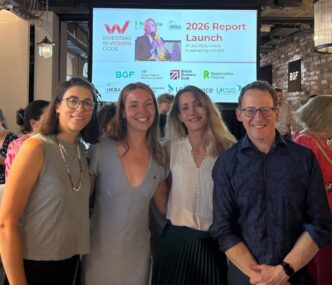
“Supporting women led businesses is an economic opportunity, and one we cannot afford to overlook,” said Lizzy Duncan, Assistant Director, Women’s Entrepreneurship at the Department for Business and Trade, speaking at the report launch hosted by BGF on 8 July. “Community Development Finance Institutions show what inclusive finance looks like.”
The Investing in Women Code was launched in 2019 with a goal to develop a better picture of funding for female entrepreneurs across the financial services, while encouraging signatories to adopt and share best practices to support women-led businesses.
The Department for Business and Trade works together with the Code Partners (Responsible Finance, the British Business Bank, Innovate UK, UK Business Angels Association, UK Finance and UK Private Capital) who collect and collate data from relevant signatories.
Responsible Finance’s data demonstrates that Community Development Finance Institutions (CDFIs) – social enterprises that specialise in supporting businesses and people who can afford to repay a loan but struggle to access finance – lend far above women’s representation in business leadership and deliver “outsized impact.”
The report includes a chapter about CDFIs’ lending figures, impacts, and CDFIs’ own gender make-up within their senior management teams and boards.
It notes that CDFIs “excel at offering practical guidance to women-led businesses” too, includes powerful case studies, and highlights initiatives including the government-appointed CDFI Task Force which will support a strategy for CDFI growth; enabling more firms led by women to access the finance they need.
Responsible Finance has encouraged members to sign up to the Code since it launched in 2019 with 12 founding signatories. Key findings within this year’s report:
- CDFIs increased business lending by 28% (from £142m to £181.7m) in 2025 while maintaining lending proportions to women-led businesses:
- 37% of CDFI business loans (and 45% of microenterprise loans) in 2025 were to women-led businesses.
- CDFIs’ lending to women-led businesses is more than double that of women’s representation in small business leadership.
- 88% of businesses (and 100% of microenterprises) which CDFIs lent to were previously turned down by other lenders; CDFIs unlock business growth.
- 54% of CDFI social enterprise loans (and 84% of the value of these loans) were to women-led social enterprises.
- And women make up at least 36% of CDFIs’ senior management teams and 31% of their boards.
“Inclusive growth here [in the CDFI numbers] isn’t a happy accident,” added Lizzy Duncan at the report launch, “it is because these organisations make a conscious effort to back talent where that talent is found. CDFIs play an important role in reaching entrepreneurs who may otherwise struggle to access finance and their contribution deserves recognition.”
Theodora Hadjimichael, Responsible Finance CEO, said:
“Every Community Development Finance Institution exists to create opportunities through access to finance and several have been members since the Investing in Women Code launched. We have always championed the Code to CDFIs, whose commitment aligns with the Code’s ambition to increase lending to women-led businesses.
“This year’s report shows the progress made. With more than 300 signatories and robust evidence, the Code demonstrates the power of community, data disclosure and determination in boosting access to finance. It’s clear the ambition doesn’t stop here and there is more work to do across the entire finance ecosystem, but I am proud that CDFIs’ lending to women-led businesses is more than double that of women’s representation in small business leadership, and that our member CDFIs have such diverse leadership themselves.”